The Only Talent Acquisition Strategy Working Right Now
I used to think I could set my annual recruiting strategy in Q4, lock in my budget, and proceed to execute for the next 12 months.
But those days are over.
The landscape around us is changing so fast that a "set it and forget it" strategy is a recipe for disaster.
Feeling this heat, a few months ago, I started researching some non-traditional ways of leading a team through a rapidly changing environment.
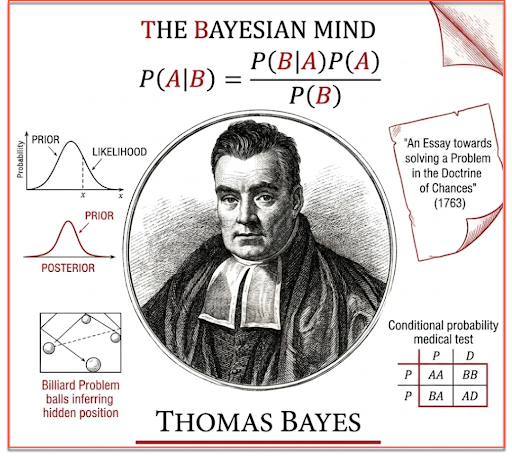
Through that work, I came across a concept called The Bayes’ Theorem.
CONDITIONS FOR BAYES’ THEOREM
Before I go deeper on how to adopt a Bayesian mindset, I think it’s important to set the stage for what I mean by “rapidly changing environment”.
And it doesn’t matter if you’re in Talent Acquisition or not. These challenges should make sense to anyone, anywhere.
Here are 4 examples of things that are rapidly changing in my world right now:
The Recruiting Tech Ecosystem is Shifting (Again)
All of my tech vendors are finally getting their act together on the AI front. That’s great, but there are a whole group of challengers building AI-first products in the same categories.
So…just when I thought I had a solid 3 year technology roadmap, I have to rethink it again.
The Labor Market is Frozen
Unemployment is rising, but still low. Many companies have pulled back on hiring. Some are shedding massive numbers of talent. The end result is a frozen labor market where people are afraid to leave and there’s nowhere to go anyway.
So…just when I thought I had a strong employee value proposition…I have to rethink my messaging strategy for this rapidly changing market.
The Economy is a Rollercoaster
The stock market is soaring, but only a few stocks are propping up the market. Debt is at an all-time high and inflation is creeping up again. CEOs are spooked. They’re fearful of the next war, the next tariff, the newest tax, or the latest bill. And when executives get scared, they become unwilling to invest in their people, innovation, wages or growth.
So…that budget I thought I was going to use to expand capabilities, I have to rethink where I invest those dollars.
Job Loss From AI Is Coming
The CEO of Anthropic just predicted the end of all white collar jobs within 5 years. New college grads are struggling to find work. Employers of entry-level talent are aggressively pulling back on hiring.
So…should I continue building out sourcing capabilities for experienced talent? Or should I be thinking more about an early career campus strategy?
Unless you work for a company directly benefiting from the growth of AI, you’re likely wrestling with some of the same challenges I outlined above.
In the face of these rapidly changing conditions, I would argue that it's time to consider adopting a new way of thinking – a Bayesian way.
WHAT IS BAYES’ THEOREM?
The challenges I described above have created an environment unlike anything I’ve seen since maybe c o v i d.
It’s forced me to think about what I do when I can’t accurately predict what the business climate will be 12, 6, or even 3 months from now!
That’s where Bayes’ Theorem comes in.
Bayes’ Theorem is an agile way of thinking that allows you to move from a static mentality to an agile one in times of uncertainty.
Thomas Bayes states that you should view your beliefs not as absolute truths or falsehoods, but as probabilities that you constantly update as you encounter new information.
Here’s a quick summary of the key principles of a Bayesian approach:
Think in Probabilities, Not Absolutes
Bayesian thinkers avoid black-and-white certainties. They think in terms of likelihoods, confidence levels, and risk management.
In practice: Instead of making a 12-month “set it and forget it” strategy, a Bayesian asks, "What parts of our strategy are vulnerable and what new data would force us to change our beliefs?"
Start with a "Prior" Probability
Bayesian thinkers rarely start with a blank slate. They begin with what Bayes calls a prior probability. This is an initial estimate or belief based on historical data or past experience.
In practice: Instead of treating every strategic choice you make as having a 100% probability of success, establish a more realistic estimate at the start. Based on historical information, you might estimate that you have a 70% chance of being right about a strategic decision you’ve made. This creates a mindset that success is not guaranteed and you need to seek continued evidence that you’re on the right path.
Actively Seek New Evidence
A Bayesian approach requires a constant influx of new data. The model relies on observing new signals, feedback, and data to test the accuracy of the initial belief.
In practice: This means actively monitoring real-time metrics, rather than waiting until the end of a cycle to evaluate success. It also means staying on top of relevant news and creating a set of advisors to help you adjust your beliefs and decisions on a rolling basis.
Calculate the "Posterior."
When new evidence arrives, a Bayesian thinker weighs it against the prior probability and makes updates in real-time. If the new evidence supports your initial direction, perhaps your probability increases. If it’s not, you have to be willing to change direction.
In practice: Let's say your initial belief was that a tight labor market was creating a talent shortage that was driving the need to build a small sourcing function to go after experienced talent. Maybe you were 100% sure of this in November. But as data comes in that 35% of new college grads can’t find a job in June and overall unemployment is rising, your confidence level in that strategic choice drops to 70%. As a result, you might shift some of your strategy from “experienced talent sourcing” to “early career hiring” to take advantage of these new market conditions.
While you might not want to challenge every strategic choice, you’ll certainly want to establish a Bayesian model for some of your larger decisions where risks are high or probabilities are low.
HOW WE MADE THE “BAYESIAN” SHIFT AT SHEETZ
In this market, I’ve learned that the goal of Bayesian thinking is to avoid a static approach to annual planning.
And instead of trying to be right with every decision, I’ve accepted that the Theorem trains me to optimize for being less wrong over time. That’s a hard mental shift for a lot of people. It certainly was for me!
To put this into practice, one of the ways we’re incorporating a Bayesian mindset at Sheetz is through a monthly “Strategic Action Plan” review. This is simply a meeting where my team pulls up a SmartSheet that details each project or key initiative that we’re working on. We talk through updates and make adjustments in real time. We put some things on hold and accelerate others based on market conditions, new information, or prioritization changes.
This process alone keeps us nimble.
WHAT WE’RE NOT WILLING TO CHANGE
Despite all the chaos we’ve encountered over the last five years and all the adjustments we’ve made to stay agile, there’s one aspect of our strategy that we won’t change.
It’s our 3 foundational pillars we call “ESP”.
That stands for Experience, Speed, and Precision.
No matter what happens in the world, every decision we make always ladders up with the intent of optimizing for these three things.
Everything else is just a probability subject to change with the next injection of data.
If you’re feeling stuck as a leader right now, uncertain about what to do because things are changing so rapidly, it might be time to lean into the change instead of resisting it. Keep your core operating beliefs in tact, but consider learning more about Bayes Theorem to inject some agility in your thinking.